Concrete guide
Concrete Slab Cost: Volume, Bags, Ready-Mix, and Site Scope
Calculate slab volume for common sizes, then separate concrete material from site prep, reinforcement, finishing, delivery, and labor assumptions.
- By
- EstimatorPad Editorial Team
- Published
- July 26, 2026
- Reading time
- 4 min
Direct answer
Start with the useful estimate.
Concrete slab cost starts with volume: length times width times thickness, with thickness converted to feet. Divide cubic feet by 27 for cubic yards, add waste, then price ready-mix or bags using local supplier data. A slab quote can also include excavation, base stone, forms, reinforcement, joints, finishing, delivery, permits, and cleanup.
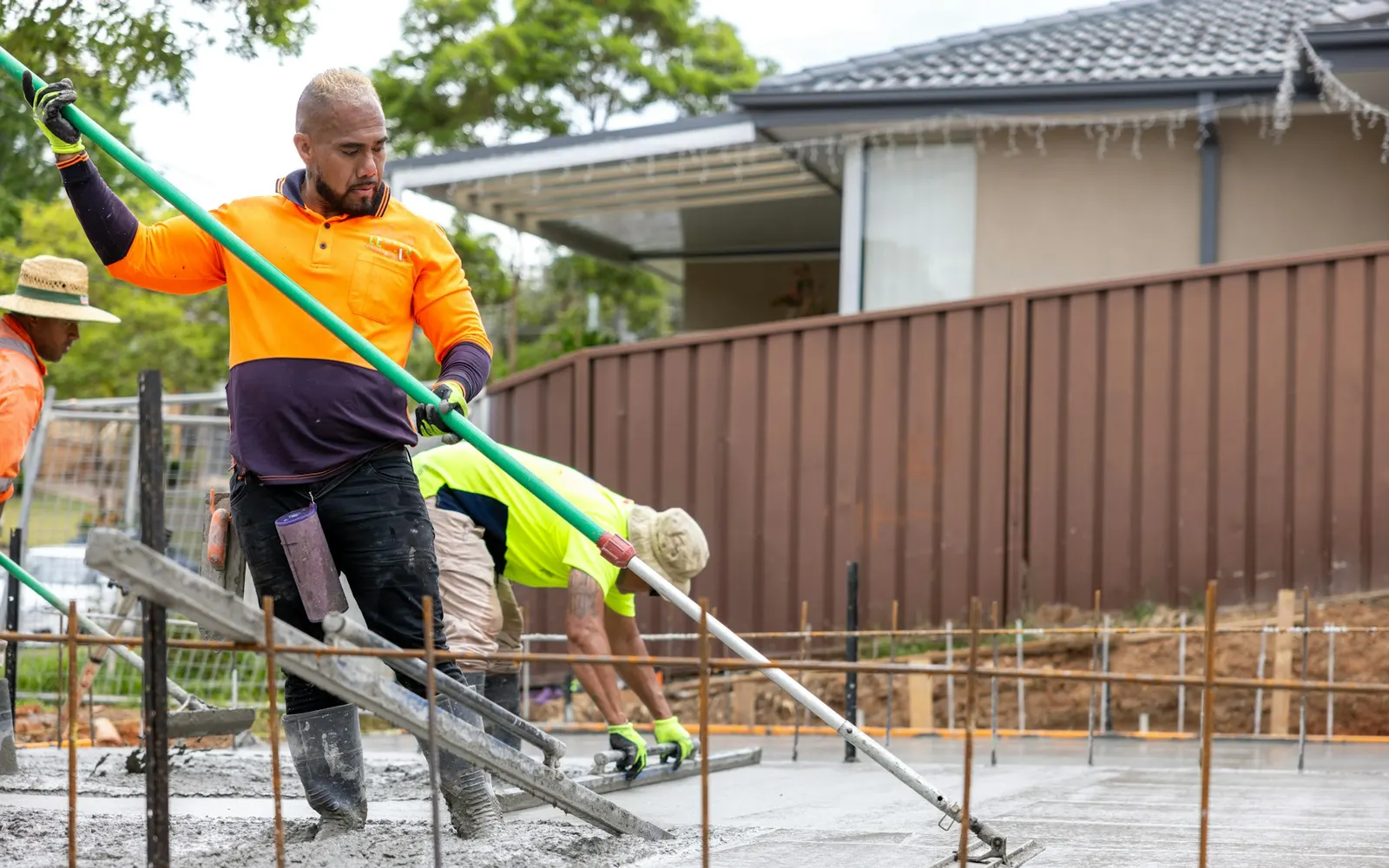
Measurement steps
How to measure
- Measure slab length and width at the formed dimensions.
- Confirm the planned thickness and whether edges or footings are thicker than the field slab.
- Use consistent units before multiplying.
- Add waste after calculating base volume.
- Choose bagged concrete or ready-mix based on volume, access, and supplier minimums.
- Keep base, reinforcement, joints, finishing, and labor separate from raw concrete volume.
Formula explanation
The formulas to use
Area_sq_ft = length_ft x width_ft
Thickness_ft = thickness_in / 12
Volume_cu_ft = area_sq_ft x thickness_ft
Volume_cu_yd = volume_cu_ft / 27
Order_volume = volume x (1 + waste_percent)
Bags = ceiling(order_volume_cu_ft / bag_yield_cu_ft)
Planning_total = concrete + delivery + base_prep + reinforcement + finishing + labor
Use with this article
Concrete Calculator
Enter the article's measurements and assumptions to check the rounded planning estimate.
Open calculatorProject cluster
Concrete planning pages
Open the full hub when you need the matching calculator, sibling guides, and related material estimates in one place.
Worked example
12x12 slab at 4 inches thick
- 1Area = 12 x 12 = 144 square feet.
- 2Thickness = 4 / 12 = 0.333 feet.
- 3Volume = 144 x 0.333 = 48 cubic feet.
- 4Cubic yards = 48 / 27 = 1.78 cubic yards before waste.
- 5With 10 percent waste, order volume is about 1.96 cubic yards.
Use local ready-mix pricing or bag yields to turn that volume into a cost estimate.
Use the concrete calculator for slab dimensions, thickness, waste, bag size, and local price, then verify supplier minimums and site scope.
Concrete slab cost starts with volume
Concrete is not ordered by square feet alone. A 10x10 slab and a 20x20 slab are measured by area, but cost starts to make sense only after thickness is included. A 6-inch slab uses 50 percent more concrete than a 4-inch slab with the same footprint.
Use the concrete calculator to keep the unit conversion visible. This matters because the most common arithmetic error is multiplying length by width by 4 without converting inches to feet.
Bagged concrete versus ready-mix
Bagged concrete can be practical for very small slabs, patches, and isolated footings, but bag counts climb quickly. Ready-mix may make more sense when the volume is large enough for delivery, but local suppliers can have minimum loads and short-load fees.
Compare the complete cost, not just material price. Bagged concrete adds mixing labor and time. Ready-mix adds delivery coordination, access, finishing pace, and possible standby charges.
Site preparation can dominate the quote
A slab quote may include excavation, gravel base, compaction, forms, reinforcement, vapor barrier, control joints, finishing, curing, saw cuts, cleanup, and hauling. If those items are missing from a price, the estimate is not describing the whole slab.
The required base, reinforcement, and thickness depend on use, soil, drainage, climate, loading, and local code. A light patio, shed base, garage slab, and driveway panel should not be treated as interchangeable.
Common size examples
Size examples are useful for checking arithmetic. They are not local quotes. Use them to see how volume grows, then replace example cost inputs with local supplier and contractor numbers.
If a slab has thickened edges, piers, steps, or a turned-down footing, calculate those volumes separately and add them to the flat slab volume before adding waste.
Common slab volumes at 4 inches thick
| Slab size | Area | Base volume | Cubic yards |
|---|---|---|---|
| 10 ft x 10 ft | 100 sq ft | 33.33 cu ft | 1.23 cu yd |
| 12 ft x 12 ft | 144 sq ft | 48.00 cu ft | 1.78 cu yd |
| 20 ft x 20 ft | 400 sq ft | 133.33 cu ft | 4.94 cu yd |
Ordering margin
Waste and ordering margin
- Add waste for uneven subgrade, spillage, form variation, and small pour uncertainty.
- Small bagged jobs should round up generously enough to avoid stopping mid-pour.
- Ready-mix orders may have minimum load, short-load, delivery, or standby charges.
- Thickened edges, footings, piers, and stairs are not captured by a flat rectangle unless entered separately.
- Do not choose slab thickness from a cost table; use the requirement for the actual project.
Avoid these
Common mistakes
- Forgetting to convert 4 inches to 0.333 feet before multiplying.
- Using square feet alone when concrete is ordered by volume.
- Assuming bagged concrete is practical for every slab size.
- Leaving out base preparation, reinforcement, control joints, finishing, and delivery.
- Treating a patio slab, shed base, and driveway slab as identical.
Project checklist
Before you use the result
- Measure length and width at the formed slab size.
- Confirm thickness and any thickened edges.
- Run the concrete calculator for cubic feet and cubic yards.
- Decide whether bagged concrete or ready-mix is practical.
- Verify bag yield, delivery minimums, and local supplier terms.
- List base, forms, reinforcement, joints, finishing, and cleanup separately.
- Use local guidance for structural or code-related slab requirements.
Estimate disclaimer
Verify before buying or building.
This guide estimates concrete slab volume and cost scope. It does not specify structural slab thickness, reinforcement, soil preparation, code compliance, permits, or professional engineering requirements.
FAQ
Common questions
01How do I calculate concrete for a slab?+
Multiply length by width by thickness after converting thickness to feet. Divide cubic feet by 27 to get cubic yards.
02How much concrete is in a 12x12 slab at 4 inches thick?+
It is about 48 cubic feet, or 1.78 cubic yards, before waste or thickened edges.
03Is concrete material the same as slab cost?+
No. A slab quote can also include base prep, forms, reinforcement, delivery, finishing, labor, and cleanup.